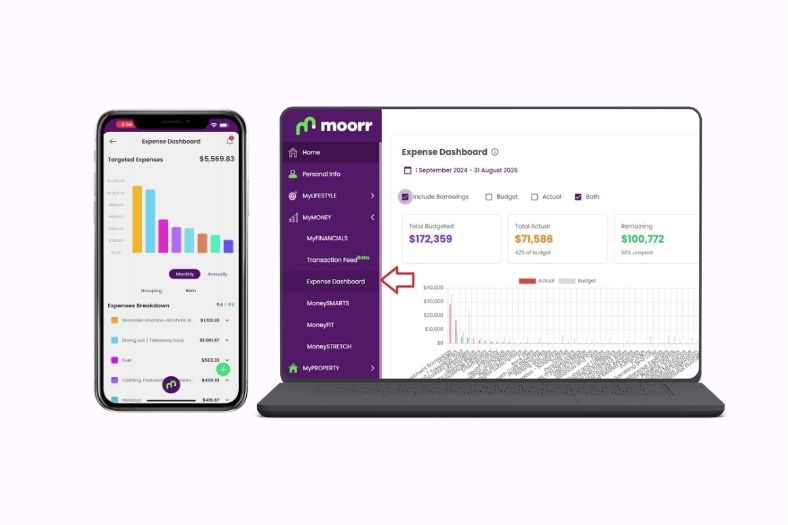
Since launching Transaction Feeds, it’s been fantastic to see thousands of Moorr users returning each month to import and update their transactions. One thing we’ve learnt is that once people can finally see where their money is going, they naturally want to understand what it actually means.
That’s why we’ve released three new insights across both the web and mobile app to help you better understand what’s happening with your loans and savings over time.
You’ll now find:
- Interest Paid over Time
- Repayments over Time
- Interest Earned over Time
These new insights are available once you’ve imported your transaction data into Moorr using the Transaction Feeds feature.
Haven’t tried Transaction Feeds yet? It’s currently available as part of our beta release. Learn more here.
Understanding your loan repayments
With respect to Principal and Interest loan repayments, most people assume their loan repayment decreases over time as they pay down their balance. It doesn’t. For most standard loans, your repayment amount is set at the outset and stays consistent, even as your outstanding balance falls.
What changes is what’s happening inside that repayment. As your outstanding balance reduces based on those fixed repayments, less interest accrues each month, so a greater share of your fixed repayment goes toward principal. Over time, you’re chipping away at the debt faster even though the dollar amount leaving your account looks identical.
It’s also worth knowing that your bank typically records interest as a separate transaction on your account, distinct from the repayment itself. So, in a given month on a $500,000 loan, you might see a $4,000 repayment going out, and a separate interest charge being added to the loan balance.
What happens if you pay down your loan faster, or build up an offset account? You’ll typically see that interest transaction reduce over time. And once your offset balance matches your loan balance, your repayments continue as normal, but almost nothing goes to interest.
So how do the following charts help?
Interest Paid over Time
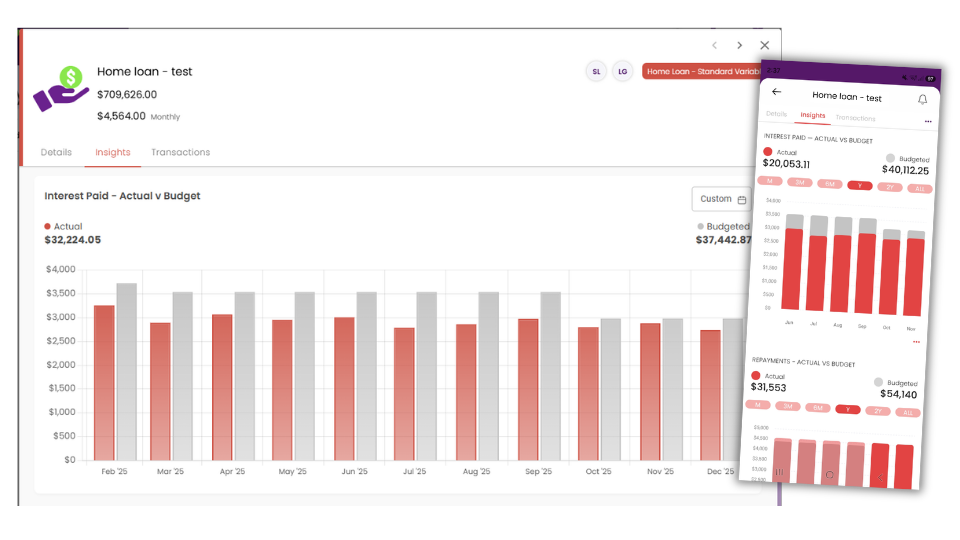
The Interest Paid over Time chart tracks these interest transactions, making it easy to see:
- how your interest costs change over time
- the impact of building an offset balance
- the effect of interest rate movements
For investment property owners, it also provides a handy summary of interest paid throughout the year, which may be useful when preparing your tax records. (As always, check with your accountant or financial adviser.)
Repayments over Time
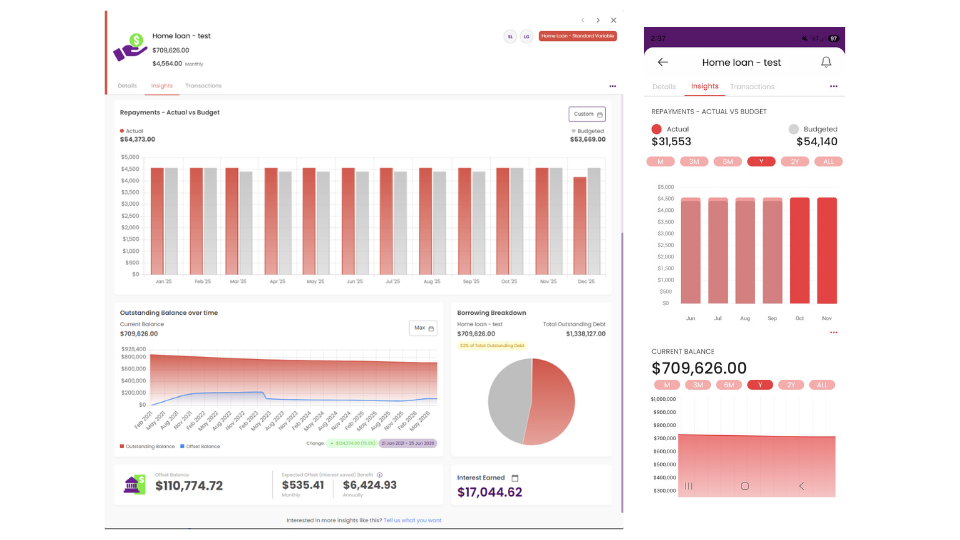
This chart shows every repayment made against your loan, allowing you to compare your actual repayments against your budget.
Because repayments are treated as internal transfers within Moorr, you’ll see the movement of money from your transaction or offset account into your loan account without distorting your household cashflow.
It’s a simple way to confirm you’re staying on track and understand exactly where your money is going each month.
Interest Earned over Time
Interest isn’t only something you pay—it’s also something you earn.
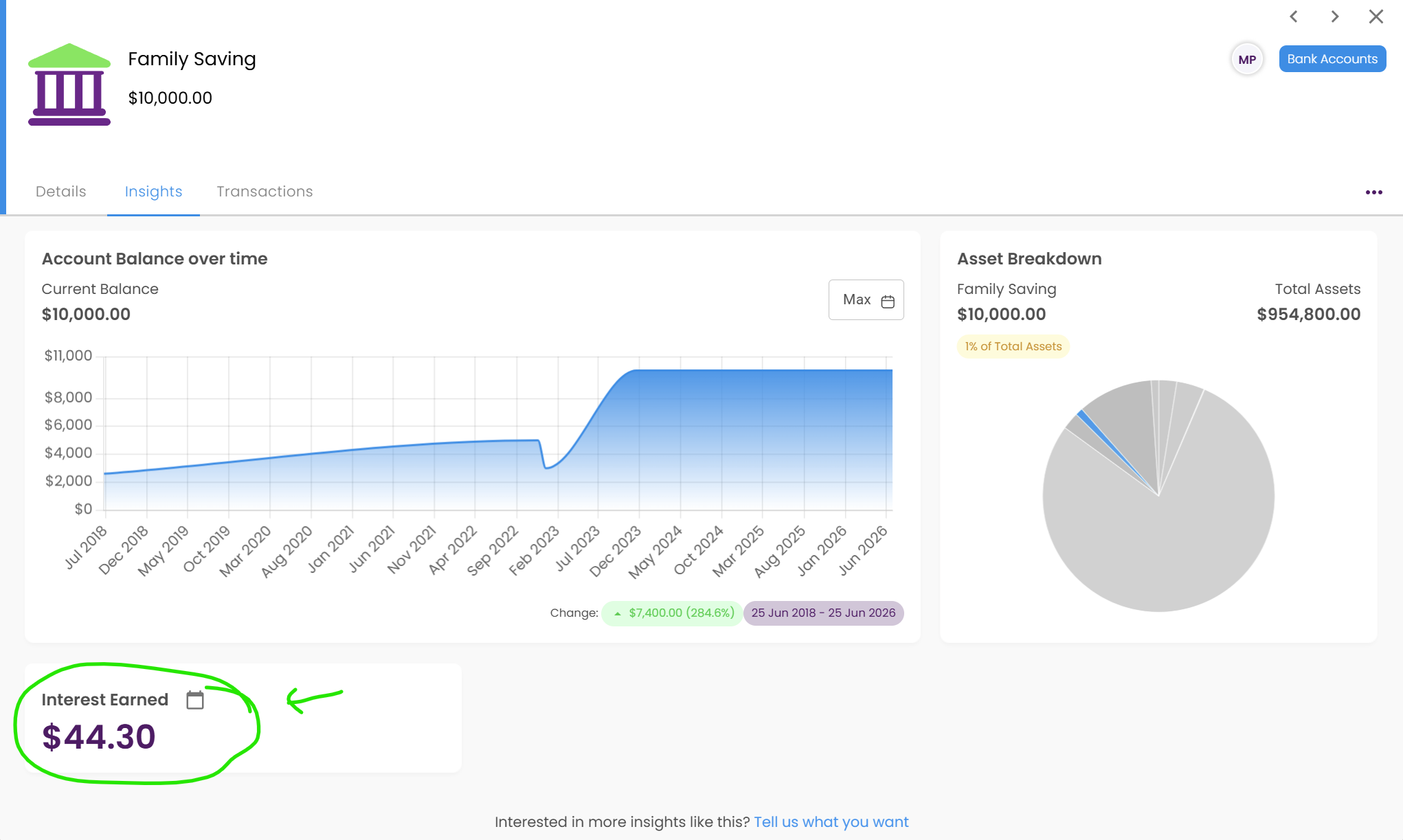
The new Interest Earned over Time sum tracks the interest credited to your savings and bank accounts, helping you understand how much your cash is earning throughout the year.
Whether you’re building an emergency fund, saving for your next property or simply making the most of higher interest rates, it’s now much easier to see the contribution your savings are making to your overall financial position.
Not seeing any data?
These insights rely on transaction data, so you’ll only see them once you’ve imported the relevant CSV statements into Moorr.
For loan insights, remember to upload the transactions for your loan account, not just your everyday transaction account. Once both sides of the repayment have been imported, Opti will help identify and match the internal transfers automatically.
If a transaction has been allocated incorrectly, simply edit the transaction and change it back to Unallocated, or update the relevant Custom Rule or Opti Rule so future transactions are categorised correctly.
Loan repayments should be allocated as an internal transfer (selectable by the dropdown menu when you hit ‘allocate’ or ‘edit transaction’). Interest transactions should auto-allocate.
What’s Next?
This is just the beginning.
As more people continue using Transaction Feeds, we’ll keep refining the experience, improving transaction accuracy, and releasing new insights to help you better understand your money.
Behind the scenes, we’re also laying the foundations for Open Banking. While Transaction Feeds currently rely on CSV imports, every improvement we make today is helping prepare Moorr for a future where your financial data can be securely connected automatically. Our goal is simple: spend less time managing your money, and more time understanding it.
A huge thank you to everyone who’s shared feedback with us so far. Every suggestion, bug report and feature request genuinely helps shape what we build next.
If you haven’t already created your free Moorr account, what are you waiting for?
Create your free account today and start seeing your money more clearly.