If you’re using Open Banking in Moorr and you’ve requested an appointment with Empower Wealth, Moorr’s sister advisory company, you may come across the term Trusted Adviser when choosing how your financial information can be shared.
It sounds reassuring, but Trusted Adviser actually has a specific meaning under Australia’s Consumer Data Right (CDR).
So, what exactly is a Trusted Adviser? Who can be one? And why might you see Empower Wealth Australia Pty Ltd mentioned as part of your Open Banking journey?
Let’s break it down.
First, what is a Trusted Adviser?
Under the Consumer Data Right, a Trusted Adviser is an eligible professional or business that you nominate to receive your CDR data so they can provide you with advice or a service.
The CDR Rules recognise specific professional classes as Trusted Advisers, including:
- qualified accountants
- lawyers with a current practising certificate
- registered tax agents and BAS agents
- financial advisers
- mortgage brokers
- financial counselling agencies
A business can also be a Trusted Adviser where it falls within one of the recognised professional classes.
You can read the official explanation in the OAIC’s Trusted Adviser guidance.
Why does the CDR allow information to be shared with a Trusted Adviser?
Sometimes, giving a professional access to accurate financial information can help them provide advice or a service without you having to manually gather and provide the same information yourself.
It can also help ensure the advice or service is based on more current and accurate financial information, giving the professional a clearer picture of your circumstances at the time.
That’s where the Trusted Adviser model comes in.
With your consent, an accredited CDR provider or CDR Representative can share selected CDR data with the Trusted Adviser you nominate.
Importantly, this sharing requires your consent.
The OAIC refers to this as a Trusted Adviser disclosure consent, or TA disclosure consent.
Consent under the CDR must be voluntary, express, informed, specific to its purpose, time limited and able to be withdrawn.
How does this work in Moorr?
When you choose to use Open Banking in Moorr, your eligible banking information first enters Moorr through Australia’s Consumer Data Right framework.
For Moorr, the initial data flow looks like this:
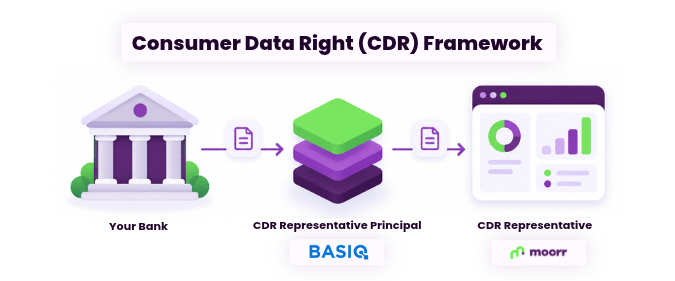
Basiq acts as Moorr’s CDR Representative Principal, while Achieve Moorr Pty Ltd operates as the CDR Representative.
If those terms are new to you, we’ve broken down exactly how that relationship works in our guide: What is a CDR Representative Principal? And Who is Basiq?
And if you want to understand the broader framework first, start with What is the Consumer Data Right (CDR) in Australia?
So, who is Moorr’s trusted adviser?
Empower Wealth is Moorr’s financial advisory business within the same Group, providing services across areas including mortgage broking, property investment advice, buyers agency, financial planning and tax.
In fact, Moorr’s origins go back to financial and cashflow tools originally developed within Empower Wealth before evolving into the platform you know today. You can learn more about that relationship on our About page.
For some Moorr users, Empower Wealth Australia Pty Ltd may be nominated as the Trusted Adviser.
For example, if you’re preparing for an appointment with Empower Wealth, you may be given the option to consent to selected financial information being shared with Empower Wealth Australia Pty Ltd to support the service or advice you’ve requested.
In that scenario, the flow becomes:
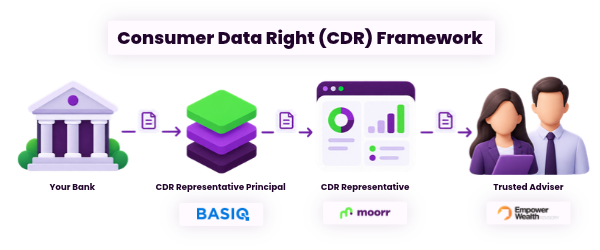
But there is an important distinction.
That final step does not happen automatically.
You must specifically consent to your CDR data being shared with Empower Wealth Australia Pty Ltd as your nominated Trusted Adviser.
CDR consent is also time limited. For this type of arrangement, consent generally cannot last for more than 12 months. Once that consent expires, future data sharing under that consent stops unless you choose to provide a new consent. You can also withdraw your consent at any time.
Trusted Adviser sharing is designed around your choice and your consent.
If you’re asked to nominate Empower Wealth Australia Pty Ltd as your Trusted Adviser, you will be able to see what information is proposed to be shared and make your own decision about whether to consent.
That means you can understand:
- who will receive your information
- what information will be shared
- why it is being shared
- how the consent works
- how you can manage or withdraw that consent
Frequently Asked Questions:
Does using Open Banking in Moorr mean Empower Wealth can see my data?
No. Connecting through Open Banking in Moorr and sharing information with a Trusted Adviser are separate actions.
Using Open Banking allows eligible banking information that you consent to share to come into Moorr, helping keep more of your financial picture up to date automatically.
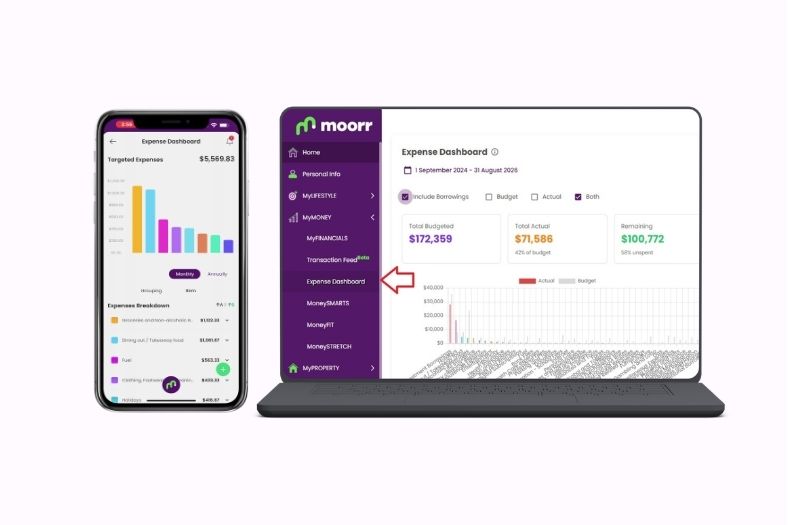
That live data can power more useful insights and tools across Moorr, from keeping your transactions and cashflow more current to helping you understand where your money is going, visualise your household cashflow and track progress towards your goals with tools like Expense Dashboard, Cashflow Breakdown and Dynamic MyGOALS.
In other words, Open Banking is designed to make Moorr more useful to you, with less manual updating and a clearer view of your finances.
It does not automatically give Empower Wealth access to that information.
Typically, only users who have requested an appointment with Empower Wealth, or who are currently engaging Empower Wealth for professional services, may be asked whether they would like to share selected information with Empower Wealth Australia Pty Ltd as their Trusted Adviser.
Only where Empower Wealth Australia Pty Ltd is nominated as your Trusted Adviser will you be asked separately whether you consent to selected information being shared with them.
What information can be shared?
The information shared with a Trusted Adviser depends on the consent you provide.
Before you consent, you should be shown what CDR information is being proposed for disclosure, who will receive it and the purpose of the sharing.
That could include selected financial information such as account and transaction information covered by your CDR consent.
Under the CDR framework, records must also be kept about Trusted Adviser disclosures, including what CDR data was disclosed, when it was disclosed and who received it.
You stay in control of whether that disclosure happens.
What happens to CDR protections once the information is shared?
This is an important part of understanding the Trusted Adviser model.
While your information is being collected and handled within the Consumer Data Right system, specific CDR privacy safeguards and requirements apply.
However, the OAIC explains that where CDR data is disclosed to a Trusted Adviser who is not themselves an accredited CDR participant, the copy of the information disclosed to that Trusted Adviser is no longer protected by the CDR-specific privacy safeguards.
That does not mean your information suddenly has no privacy protections.
Trusted Advisers is still be subject to other privacy laws, professional standards and regulatory requirements governing how they handle your information.
You can read more about this distinction directly from the Office of the Australian Information Commissioner.
How will Empower Wealth handle information shared with it?
Where you consent to information being shared with Empower Wealth Australia Pty Ltd as your Trusted Adviser, that information will be handled in accordance with Empower Wealth’s Privacy Policy and any applicable privacy and professional obligations.
The Privacy Policy explains how the Empower Wealth group collects, holds, uses and discloses personal and financial information, as well as your rights relating to that information.
Read Empower Wealth’s Privacy Policy here.
Want to dive deeper?
Learn more about Open Banking in Moorr, read our guide to the Consumer Data Right, or explore how Basiq and the CDR Representative Principal model work behind the scenes.
For independent information about Trusted Advisers, visit the OAIC’s official Consumer Data Right guidance.